
A different approach to tissue sampling
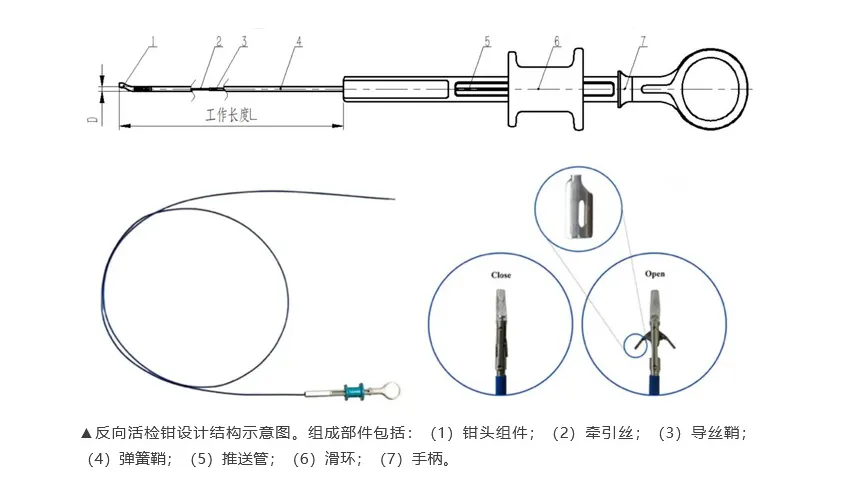
PUMCH reports that its gastroenterology team developed an “umbrella-shaped” forceps with a reverse-opening mechanism. During the described procedure, the instrument passes over a guidewire through a narrowed section of the bile duct. After reaching the proximal side of the lesion, the jaws open; the operator then draws the device back so the jaws contact the duct wall and collect tissue. This proximal-side approach is intended to complement the forward, distal-side sampling used with conventional forceps.
The device was designed to address practical challenges caused by the bile duct’s path, the angle of a stricture and the location of a lesion. The report says the project has completed patent technology transfer and that a paper describing the feasibility, safety and preliminary diagnostic value was accepted by the World Journal of Gastroenterology.
What the early study reported
The hospital describes a single-centre prospective study involving 16 patients whose imaging raised a high suspicion of malignant biliary stricture. Each patient underwent sampling with both conventional and reverse-opening forceps, in randomized order. Pathology teams assessed the resulting specimens.
Compared with conventional forceps, the reverse-opening device showed more favourable trends in single-sample weight, maximum diameter and specimen-quality score. The report presents this as an early feasibility signal. A small, single-centre study does not establish that the device improves diagnosis or outcomes.
What comes next
PUMCH says the team plans larger, multicentre prospective research to further evaluate feasibility and to develop a standardized operating approach. The report describes ongoing product engineering and development toward a medical-device product; it does not say that the device is already routinely available to patients.
Relevance to bile duct cancer
The hospital frames the work around the difficulty of obtaining pathological tissue from biliary strictures, including cases where cholangiocarcinoma is suspected. Cholangiocarcinoma (bile duct cancer) belongs under Wellward China’s broad Cancer & Tumors health area. The device is a sampling tool; this report is not a guide to diagnosing or treating an individual patient.